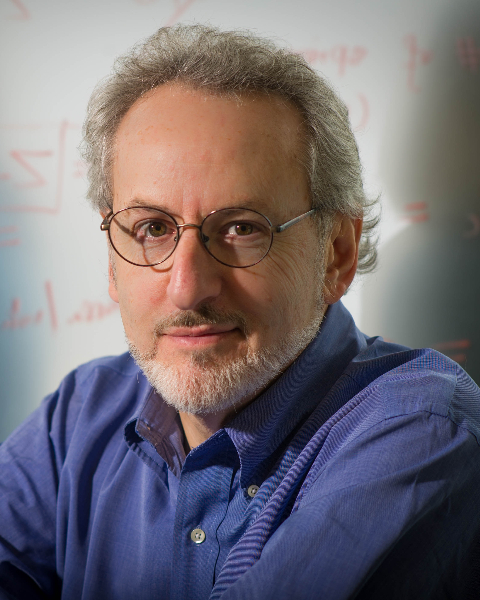
Founding Director Wyss Institute for Biologically Inspired Engineering at Harvard University
The burgeoning field of Biologically Inspired Engineering strives to leverage biological design principles to develop new engineering innovations to advance healthcare and sustainability. As Founding Director of the Wyss Institute for Biologically Inspired Engineering at Harvard University, one of the first challenges we took on was to develop a way to drastically decrease the high failure rate and associated costs that pharmaceutical and biotechnology companies face when they attempt to bring a drug through the development pipeline and obtain regulatory approval. As a major cause of failure is the inability of preclinical animal models to successfully predict drug efficacy and toxicities in humans, we set out to create an alternative. In this presentation, I will describe Organ-on-a-chip (Organ Chip) microfluidic devices lined with living human tissues that form tissue-tissue interfaces, reconstitute vascular perfusion and organotypic mechanical cues, integrate immune cells, contain living microbiome, and recapitulate human organ-level physiology and pathophysiology with high fidelity. Work will be presented describing how single human Organ Chips and multi-organ human Body-on-Chips systems have been used to model complex diseases and rare genetic disorders, study host-microbiome interactions, both mimic and quantitatively predict drug pharmacokinetic and pharmacodynamic parameters, recapitulate whole body inter-organ physiology, and reproduce human clinical responses to drugs, radiation, toxins, and infectious pathogens. Human Organ Chips also have been used to gain new insight into mechanisms of host immunity to viral infections and to develop new therapeutics for potential pandemic respiratory viruses, including influenza and SARS-CoV-2. Results confirming that human Organ Chip models of drug-induced liver injury are significantly more accurate than animal models at predicting human responses will also be presented. My message is that the possibility that human Organ Chips can be used in lieu of animal models for drug development and as living avatars for personalized medicine is coming ever closer to becoming a reality.